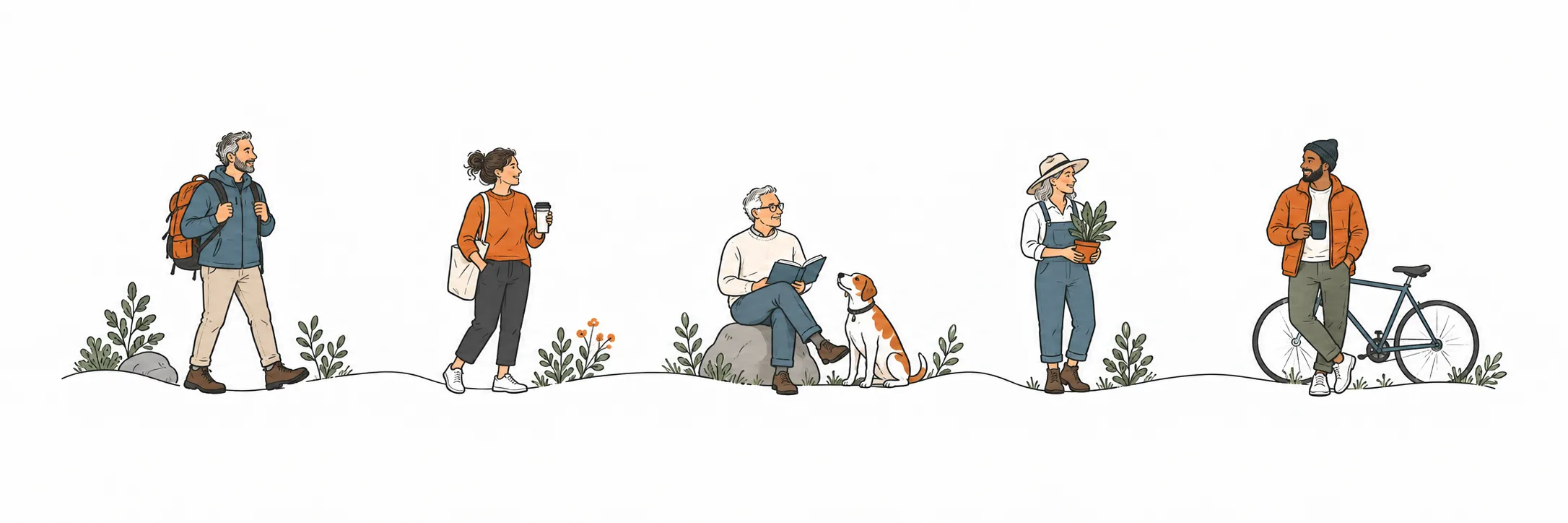

Dave Gow’s first year brought relief and a surprising lack of direction. Later, writing, turtle rescue and local planting projects supplied chosen commitments. He still had to watch the balance: useful activities can crowd a free life just as readily as paid work.
People
Inside this selection · reported retirement ages
Under 352
35–447
45+8
Not established numerically28
All 45 matching people, across every page. Updates with your filters. How we count
An open-ended break reveals a comfortable spending level
Snapshot · 2024Indefinite post-FI career break · at interview
A year into indefinite time away from work, the couple found themselves spending below their planned ceiling and enjoying an active lifestyle. He was more concerned about waiting too long to leave work than about having left too soon.
After selling his business, HariSeldon explored smaller projects. Seventeen years later, travel and a simpler home mattered more than increasing wealth.

Leaving accounting reduced u/jellybean83087’s stress and raised her reported happiness. But a year of freedom exposed two things she missed: meaningful social contact and difficult problems. Her next update supplied an answer. She sold her car, moved to Japan and enrolled in language school, turning a childhood interest into the structure her retirement lacked.

Burnout pushed u/peppers_ out of work at 36. The years that followed brought classes, ceramics, new friendships and a much clearer sense of what mattered. They also brought a bruised portfolio and spending far above the original estimate. Freedom proved valuable, but the life it uncovered required a plan flexible enough to change.

Jeremy Jacobson and Winnie built their early retirement around an open road. A decade later, school runs, children’s activities and suburban bills set the rhythm. Their chronicle follows a freedom big enough to change shape: first adventure, then parenting, with a slower release from work anxiety than the travel photos might suggest.
After years of delaying departure, this IT worker agreed to try three months without another contract. Initial difficulty gave way to pleasure in games, cooking and self-directed learning, with family caregiving and small trips woven into a largely home-centered life.
A bank employee joined her already-retired husband after an anxious wait for a layoff. Their new life was active and social, but it also gave them time to support a close friend nearing the end of life.
Jake left a draining London career after moving his family to a cheaper region. Children’s routines gave retirement an immediate structure. Months later, he was practicing more flexible spending and noticing that thoughts about his former employer were gradually receding.

Barney’s interviews connect the uncertainty of leaving a successful career with the appeal of building a new role afterward. Writing for a UK audience grew into wider teaching and coaching. Rest mattered, but his preferred destination was work he could choose.